In this story
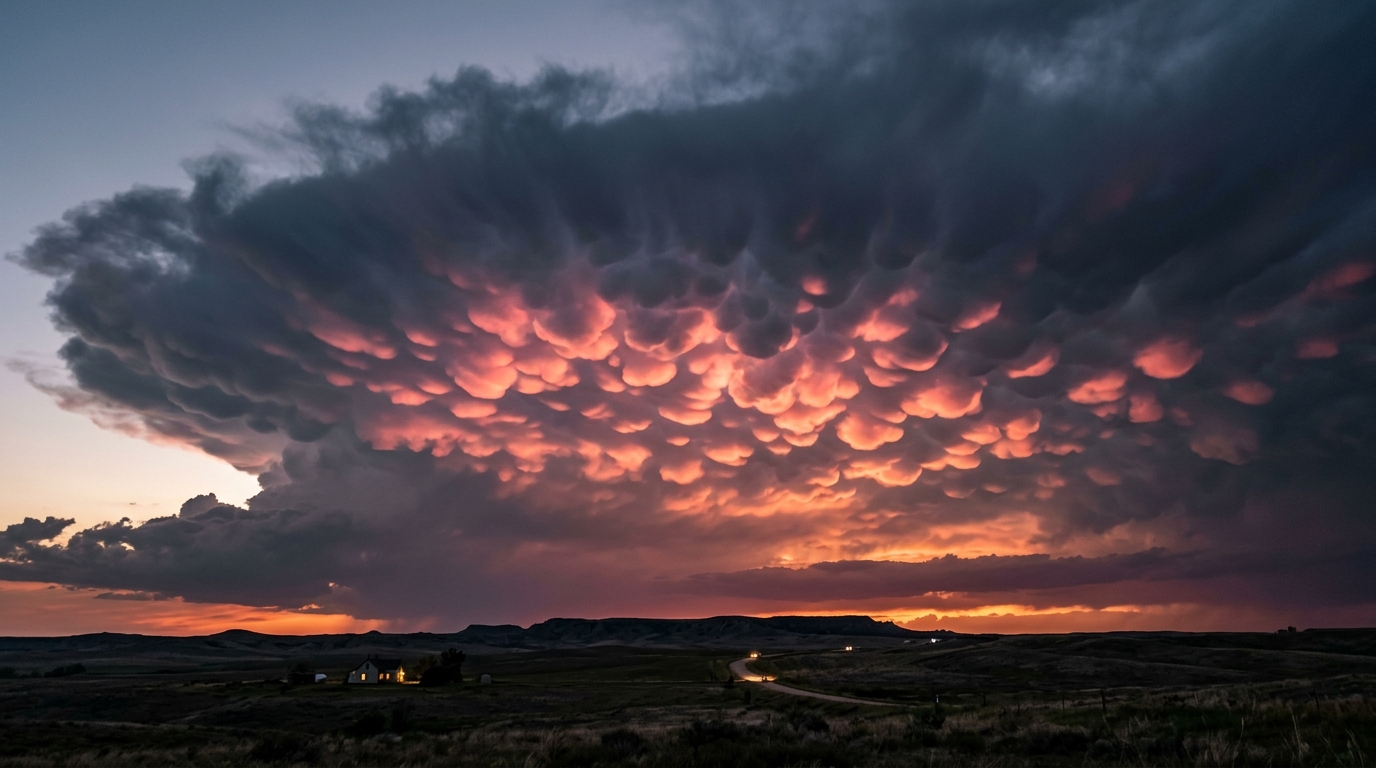
Convective season is back across the northern hemisphere, which means that any landscape photographer with a window facing west and a phone that occasionally pings them about "Dramatic Storm Clouds" is about to start seeing those alerts again. This is the post for what to do with them.
I'll skip the intro about how dramatic storms are and get to the part nobody tells you when you're starting out: the best storm photos almost never come from the peak of the cell. They come from the 30-90 minutes before the precipitation arrives, and the 30-90 minutes after it leaves. The middle is mostly a wall of water and limited visibility. Storm chasers have known this for decades. Most landscape photographers haven't, because the apps that schedule us mostly say "thunderstorm at 17:00" and stop there.
Two windows, not one
A mature thunderstorm has five phases. Photographically, two of them matter, two of them don't, and one of them is just lightning.
Phase one - towering cumulus. One to three hours before peak, you'll see the cumulus tower vertically. Sky around it still mostly lit. Useful for "storm gathering" landscapes if you have a foreground that frames it, but the structure isn't there yet.
Phase two - anvil and shelf approach. Thirty to ninety minutes before the precipitation core arrives. The anvil has spread out at the tropopause, the gust front has produced a shelf cloud at the leading edge, and on a supercell you may see a wall cloud beneath the updraft. The sun, still low in the western sky, is illuminating cloud bases from below while the ground is still warm. This is the first prime window.
Phase three - precipitation core. Heavy rain, hail, the occasional power outage. Lightning peaks here. As a landscape subject this is mostly a wash; visibility is bad, the sky is one tone, and you can't see structure through the curtain. Lightning photography is the exception (more on that below).
Phase four - departure and back-shear. Thirty to ninety minutes after the core moves on. Mammatus pouches under the trailing anvil, virga (precipitation that doesn't reach the ground) hanging in beautiful curtains, frequent rainbows opposite the sun, and - if the timing works - back-anvil illumination from a low sun that lights the underside of the anvil pink and orange. This is the second prime window, and on a good day it's better than the first.
Phase five - dissipation. The atmospheric rinse cycle is done. The air is exceptionally clean and clear. Sunset shoots that catch this phase tend to be unusually crisp.

Approach window (-90 to -30 min)
- Subjects: Shelf cloud, anvil overhang, mammatus on the leading anvil, wall cloud (supercells), towering convective updraft.
- Light: Sun usually still warm and direct on the foreground, with cloud bases lit from below.
- Risk profile: Outflow gusts and lightning at the leading edge - this is when chasers stop driving and start shooting.
- Composition tip: Wide focal length (16-35 mm). The shelf cloud is enormous and closer than it looks.
Departure window (+30 to +90 min)
- Subjects: Mammatus pouches under the back-shear anvil, virga curtains, rainbows opposite the sun, back-anvil glow.
- Light: Often the cleanest air of the day. If the storm passes during the late afternoon, the back-anvil catches sunset directly - pinks, oranges, sometimes near-magenta.
- Risk profile: Storm has moved on; remaining hazards are wet roads and the occasional residual gust.
- Composition tip: 24-70 mm with the anvil as the upper third of the frame. Watch the eastern sky for rainbows when the sun comes back out behind you.
Position matters as much as timing
Most midlatitude storms move with the 700 hPa wind - what meteorologists call the steering flow. In the northern hemisphere this usually means west-to-east or southwest-to-northeast. Once you know the steering direction, you know where the storm is coming from, where it's going, and which side has the photogenic structure.
Inflow side - typically southeast of the cell for a northeast-tracking storm - is where storm chasers position themselves. The storm is drawing warm, moist air up into itself from this direction, which means a clear view of the wall cloud, the shelf cloud's leading edge, and any tornado that might form. It is also, for the same reason, the side closest to the actual storm.
Outflow / back-anvil side - directly behind where the storm came from - is where you stand for the second window. The cell is moving away, the cleanest air of the day is washing in behind it, and if the sun is low to the west and the storm is moving east, you're looking at a fully back-illuminated mammatus deck with pink and orange on its underside. This is the postcard shot.
A simple rule for the day-of: face the wind early in the storm to find the approach. Turn around after the rain stops to find the departure. The wind direction at ridge-top altitude - what you'd see at 700 hPa - is the storm's compass.
The peak is for lightning, not landscapes
During the precipitation core itself, the sky is mostly a uniform dark grey, visibility is short, and your gear is at risk. The exception is lightning, which photographs best when ambient light is low enough to allow long exposures. The recipe:
- Twilight or blue hour, not daylight. A 10-30 second exposure during the day is just an overexposed grey frame. The same exposure at dusk, with bolts firing every few minutes, is a portfolio shot.
- Sturdy tripod - carbon fibre, not aluminium, if the storm is close. Aluminium near lightning is asking for trouble.
- Manual focus at infinity. Autofocus will hunt all night.
- ISO 100-400, f/8-f/11, 10-30 second exposures. Use a remote release or interval timer; don't touch the camera.
- Stay 10+ km from the active core. Lightning travels horizontally further than people think - anvil crawlers can fire 30 km from the core. Shelter in a vehicle (the Faraday cage works), not under a tree.
When golden hour multiplies everything
The single biggest variable for storm photography is whether the action overlaps with golden hour. An afternoon storm at 13:00 looks fine. The same storm at 18:30 in mid-summer, with the back-anvil mammatus catching the last horizontal sun before sunset, looks like the cover of a meteorology textbook. There's no other variable that changes the impact this much.
This is also where European geography pays off. Continental thunderstorms in central Europe tend to fire in the afternoon and dissipate during the evening - meaning the departure window often lands squarely in golden hour or blue hour. North American Plains chases produce more spectacular structure on average, but European photographers can still produce extraordinary back-anvil shots from a back garden with the right timing. You don't have to drive to Tornado Alley.
Safety, briefly
Most storm-photography injuries aren't from lightning, they're from people doing dumb things to get to a storm. The short version:
- Don't drive through standing water. Six inches of moving water can carry a car. This kills more people every year than tornadoes.
- Don't shelter under trees, near tall metal structures, or on exposed ridges. If you're in the open and your hair stands on end, crouch low immediately - that's leader formation.
- Stay away from summits during convective weather. Alpinists know this; landscape photographers sometimes don't.
- Have at least two escape routes from any storm-photography position. The storm can change direction; you need to be able to leave by either.
What Inverza now does on a storm day
The Dramatic Storm Clouds detector got a substantial upgrade in the latest version. Until now it was looking at cloud cover and wind speed, which means it would happily fire on a windy overcast day with no actual storm in it - exactly the false positive every photographer learns to ignore.
It now reads three additional signals from the forecast: the WMO weather code (which distinguishes generic overcast from rain showers from active thunderstorms), CAPE (Convective Available Potential Energy - the meteorologist's measure of how primed the atmosphere is to thunderstorm), and Lifted Index (atmospheric stability - negative values mean the air is unstable). The detector won't fire unless at least one of these signals is meaningful. Windy overcast days with no convection don't surface as storm-cloud opportunities anymore.
When it does fire, the recommendation now spells out both windows by clock time rather than just "storm at 17:00":
If you tap through to the AI chat from the badge, the assistant has the same expertise loaded - phase windows, steering flow, golden-hour overlap, lightning safety - and can answer "is this worth driving 90 minutes for?" or "should I face the storm or turn my back to it for the better shot?" with the actual numbers from your forecast.
What to do this week
Convective season is firing across most of the northern hemisphere right now. A few things worth doing:
- Set a storm-cloud alert for the spots you can reach within 90 minutes. The two-window structure means you have time - a storm that's an hour away when the badge fires is still well within the approach window.
- Pre-scout an outflow viewpoint. Specifically: somewhere with a clear eastern horizon (for back-anvil mammatus from late-afternoon storms) and a foreground that gives the cloud something to anchor against. A ridge, a lake, a distant town with lights coming on at twilight.
- Pre-pack a storm bag. Carbon-fibre tripod, intervalometer, microfibre cloths (lots of them), rain cover, headlamp. The departure window often runs into blue hour, and you'll want light to find your way back to the car.
- Watch the 700 hPa wind direction the day before. Inverza shows it under the lenticular detector, but you can also just check Windy's "Wind / 700 hPa" layer. That direction tells you where storms come from and where to stand.
The middle of the storm is mostly water and noise. Everything photographic is on the edges. Get to the edges.
